
Marks of Return:
Between Movement and Stillness
Reem Hamed
Curated by Sarrah Bashir and Ahmad Al Bissani
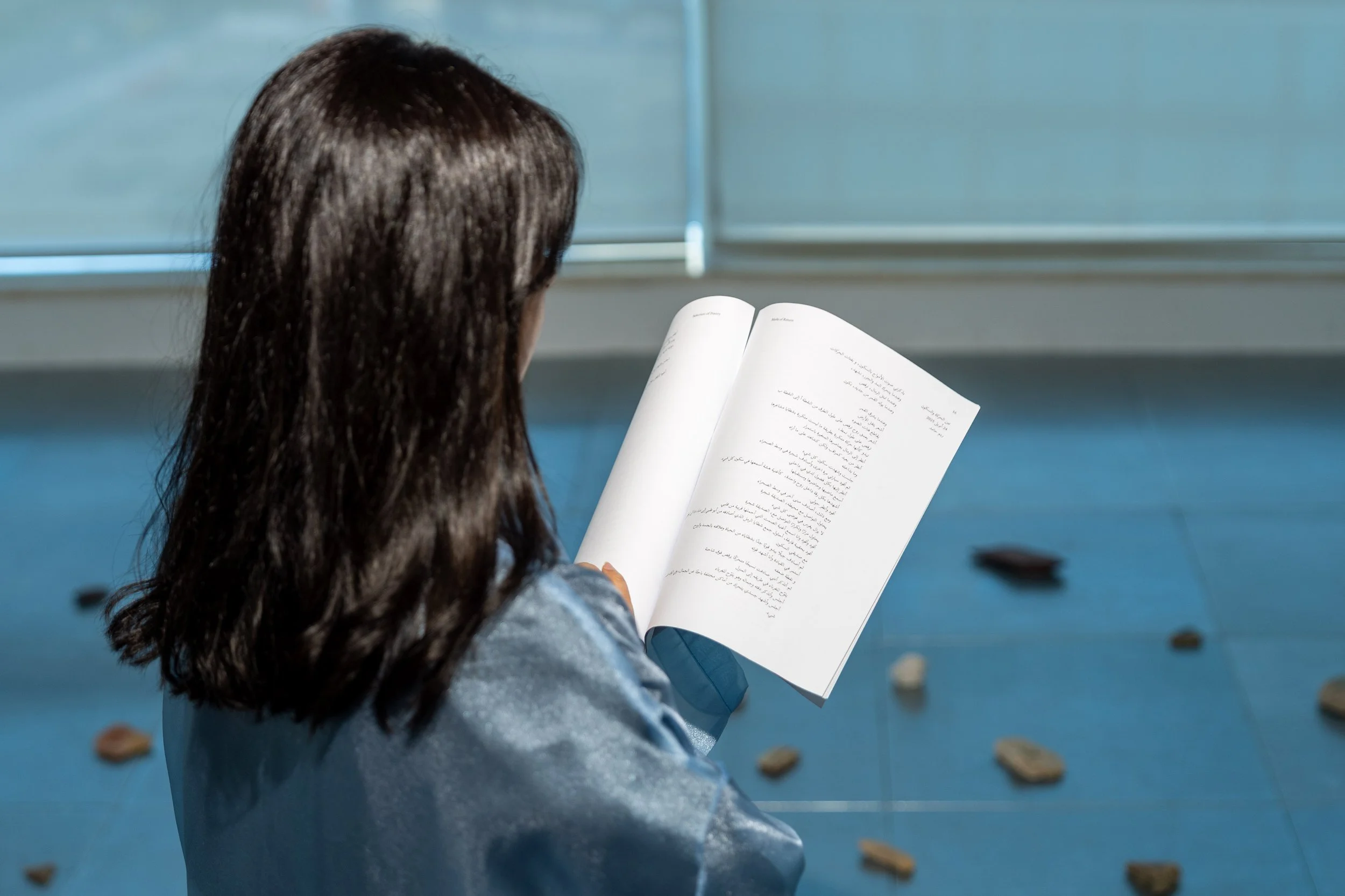
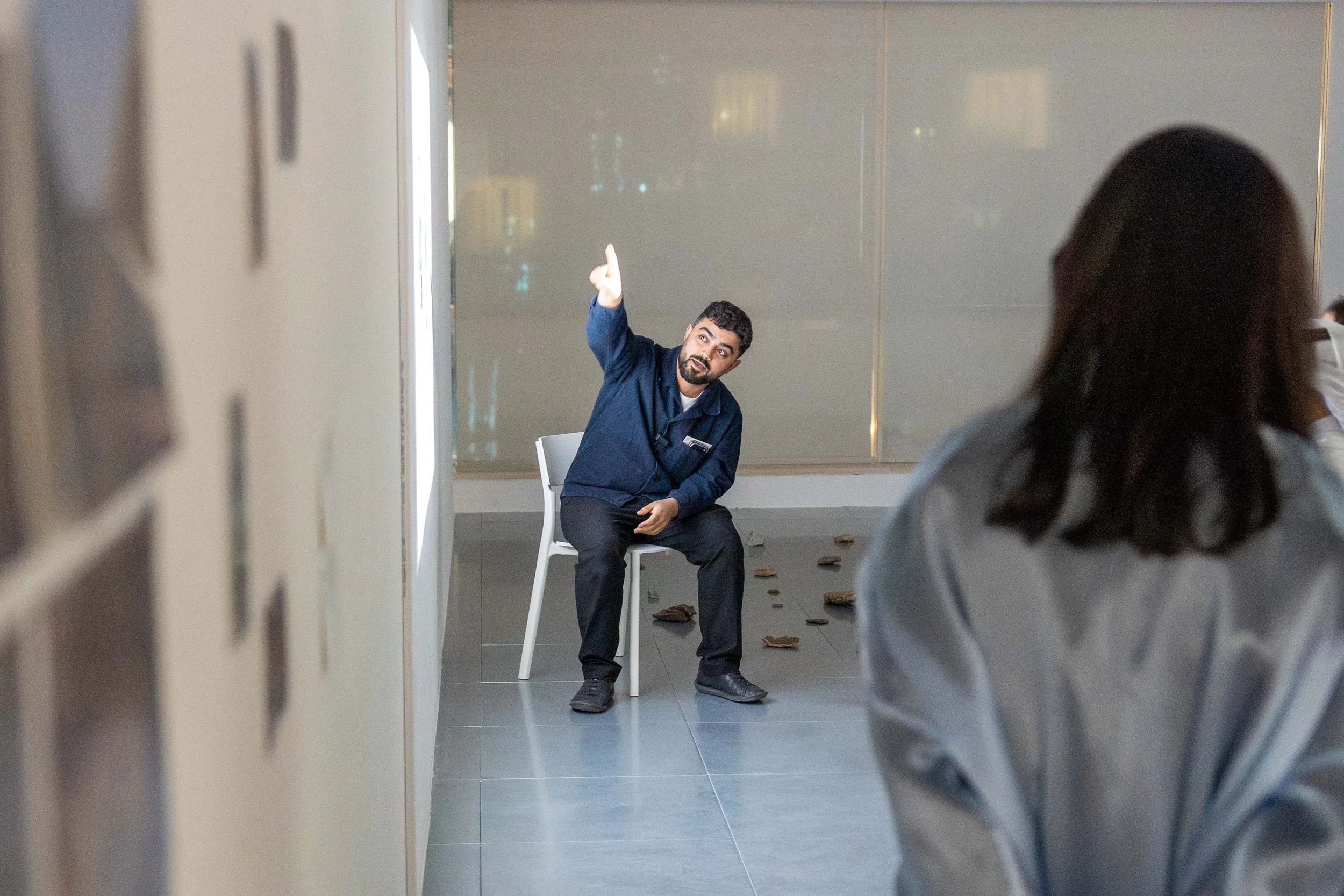
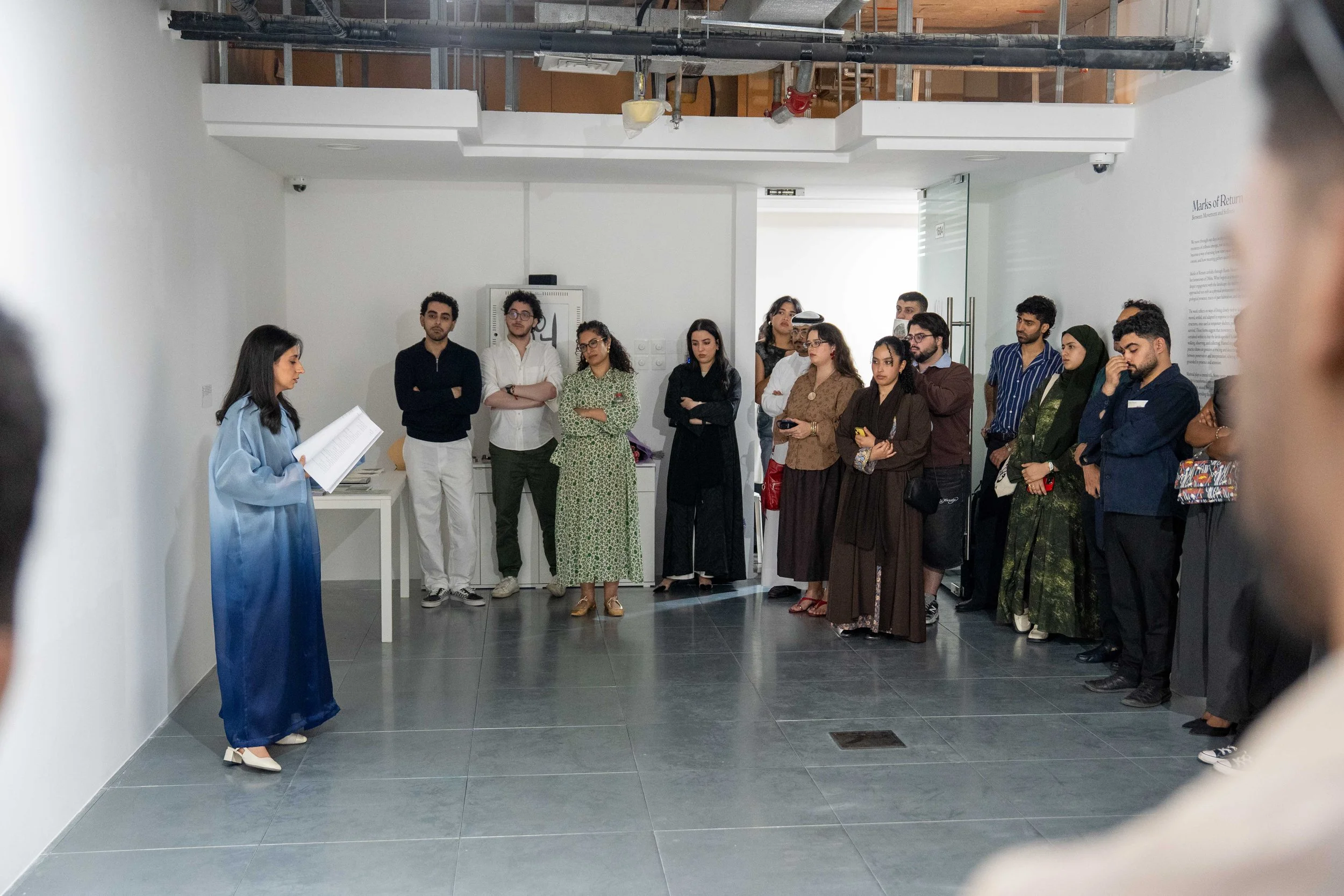
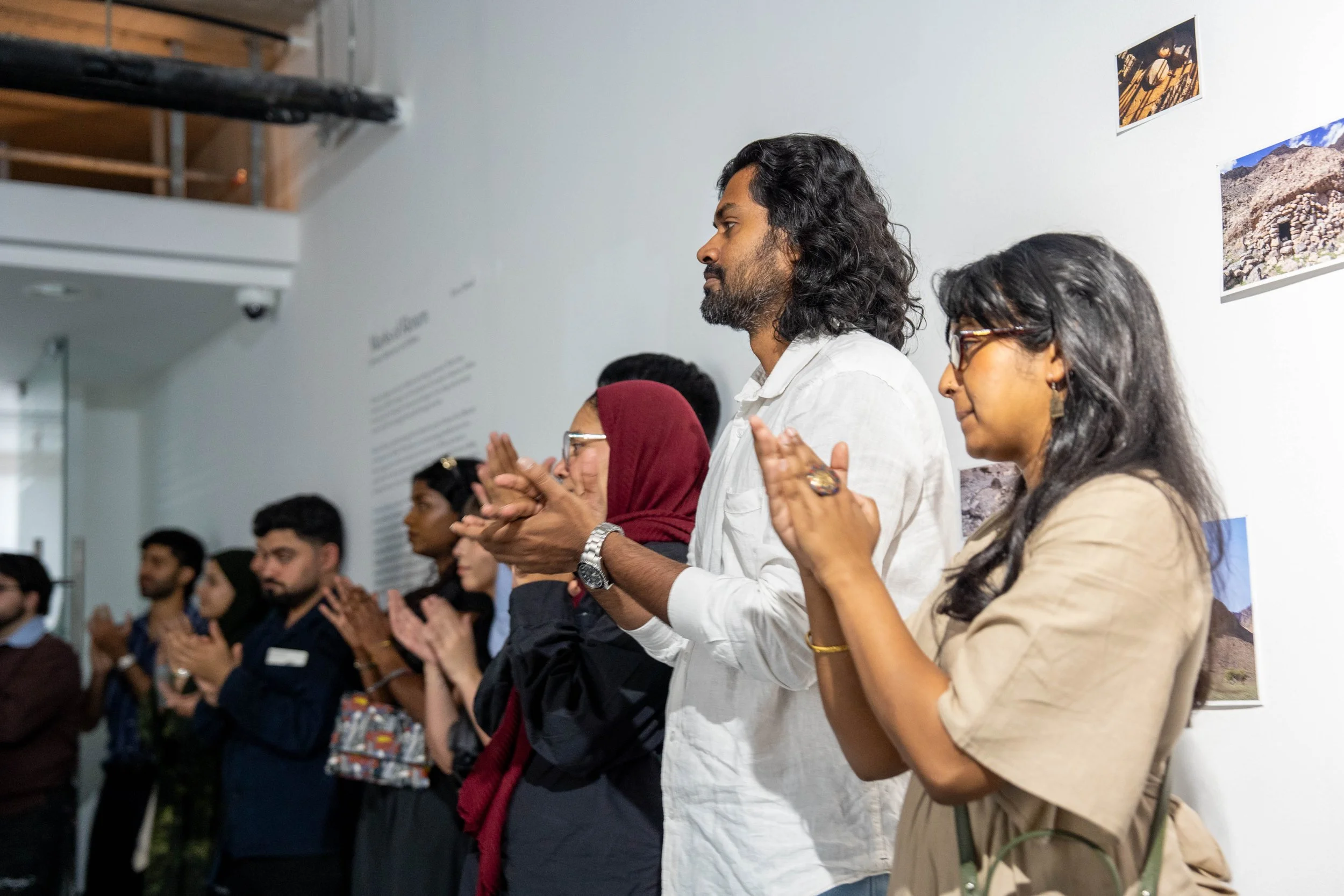
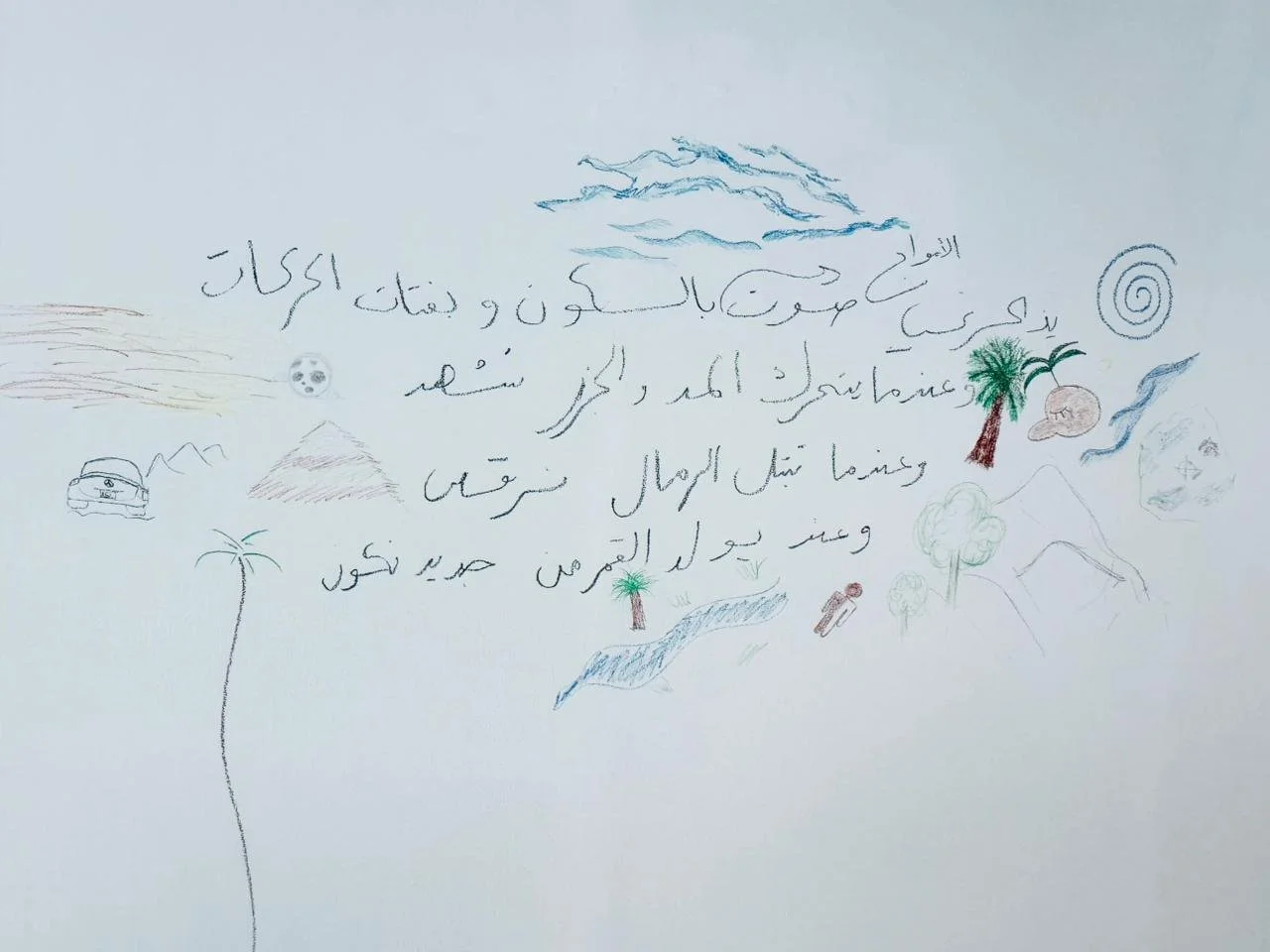
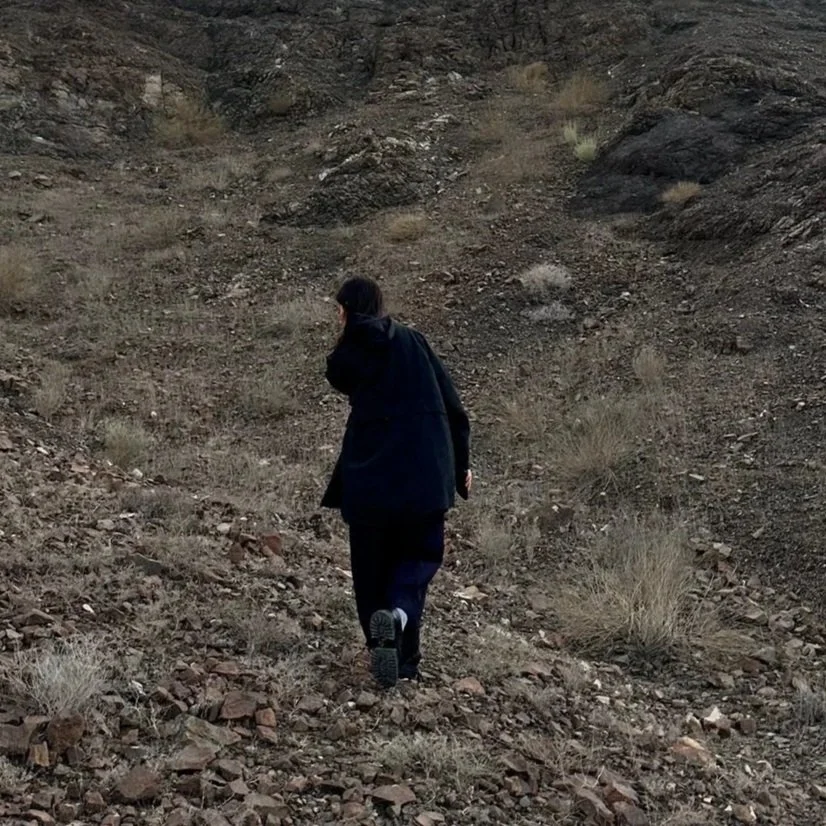
Reem Hamed (b. 1996, Dubai, UAE) is a poet and visual artist whose interdisciplinary practice explores movement and stillness as emotional, spiritual, and temporal states. Working across sound, photography, text, clay, and performance, her work examines transition, repetition, and presence through lived experience and research. She is currently expanding her practice into sound and performance.
Hamed holds a degree in International Business from the University of North Carolina in 2019 and a master’s in Public Affairs from UNC Greensboro in 2022.

Marks of Return
We move through our days in rhythms that often go unnoticed. Within them, moments of stillness emerge, not as interruptions, but as spaces of awareness. Stillness becomes a way of sensing how time passes through us, how change and continuity coexist, and how meaning gathers quietly through attention.
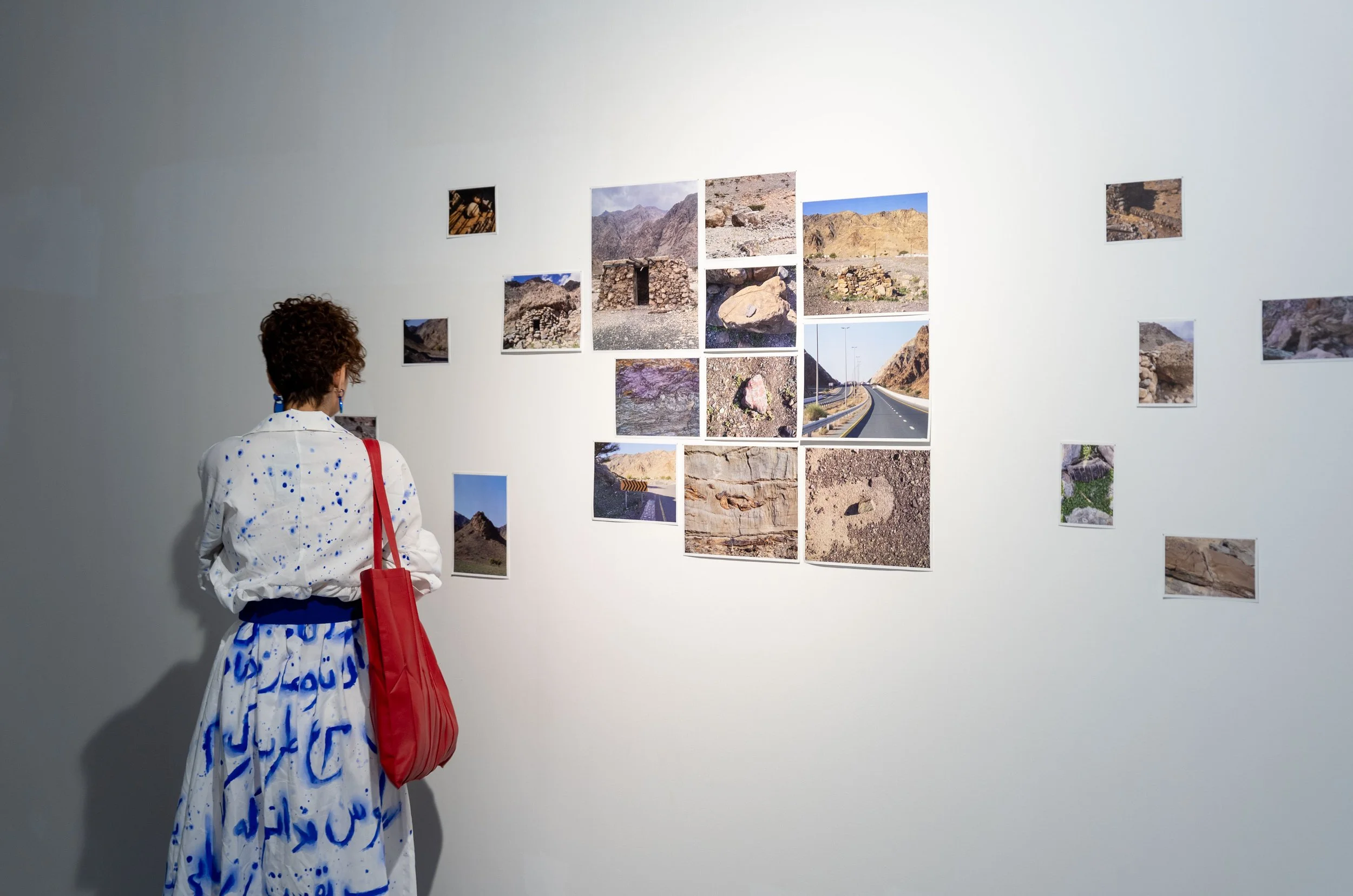
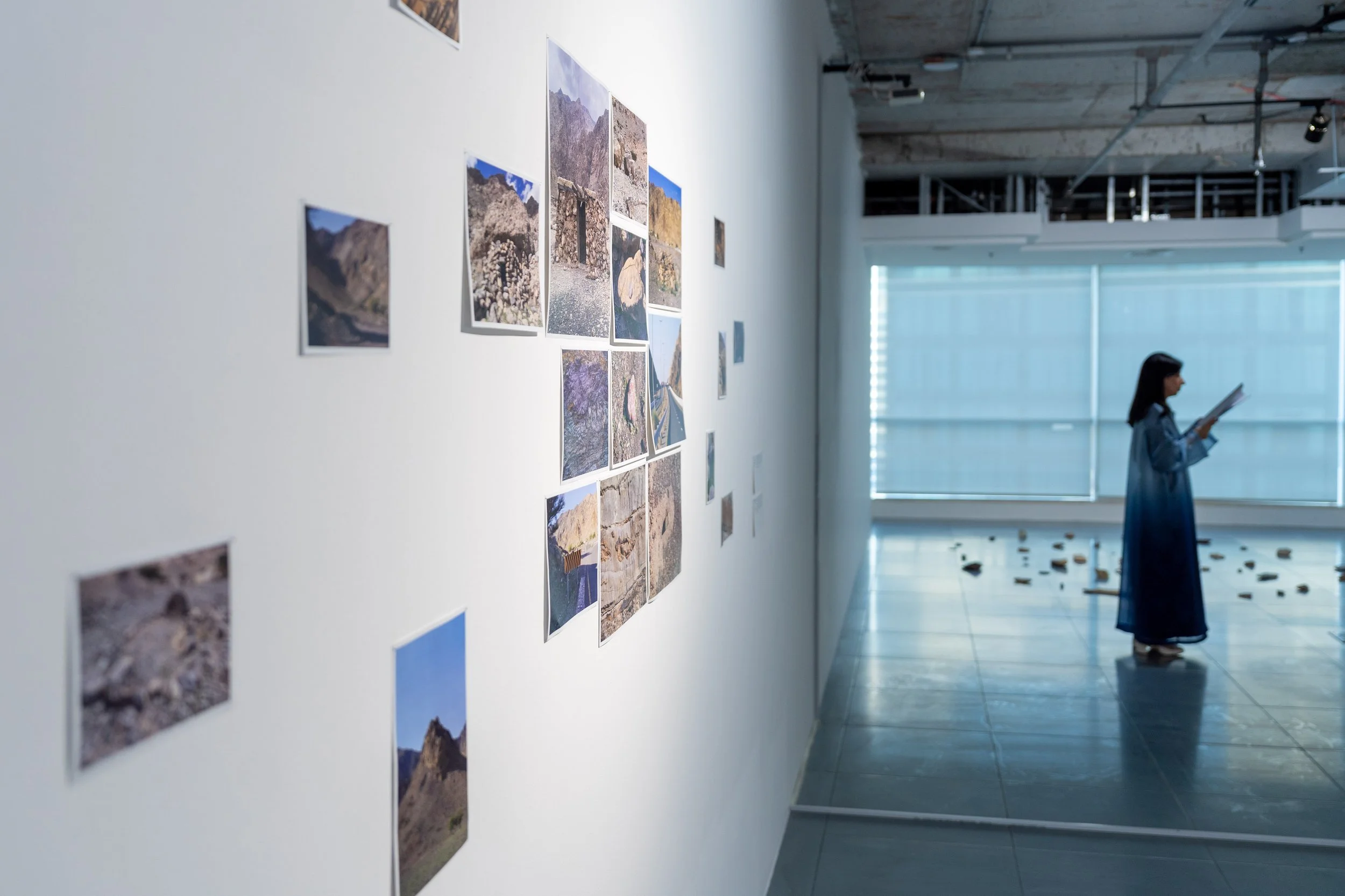
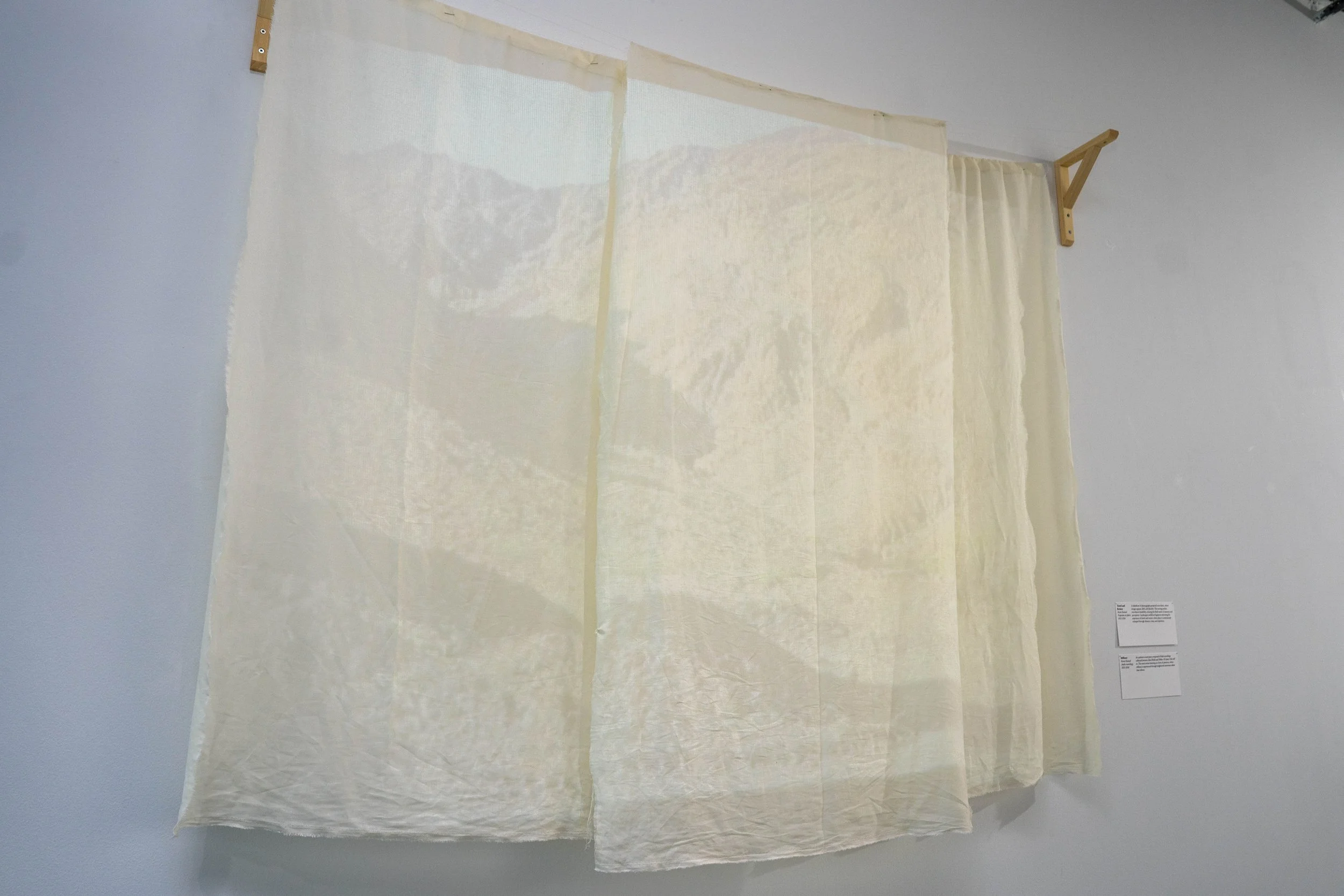
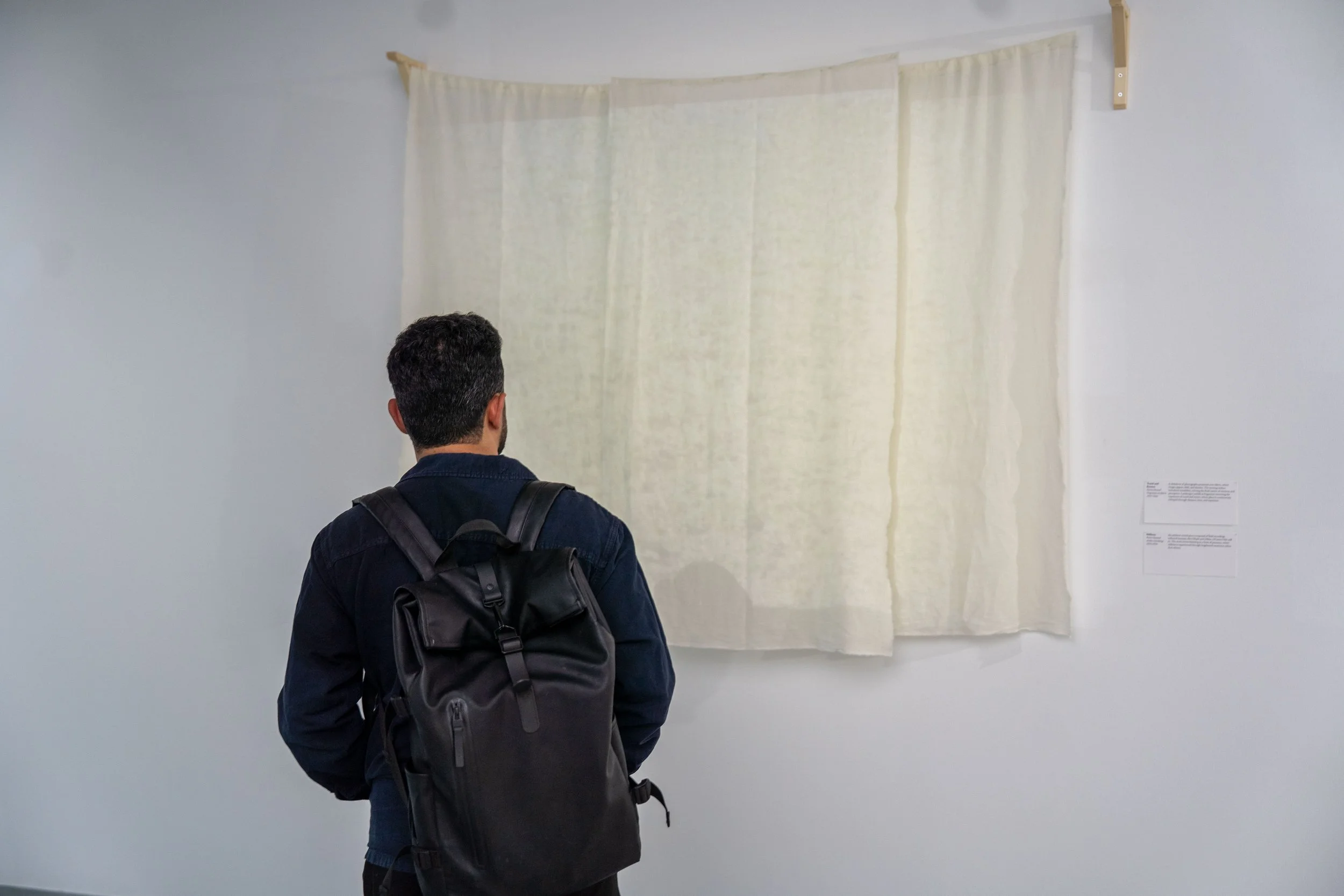
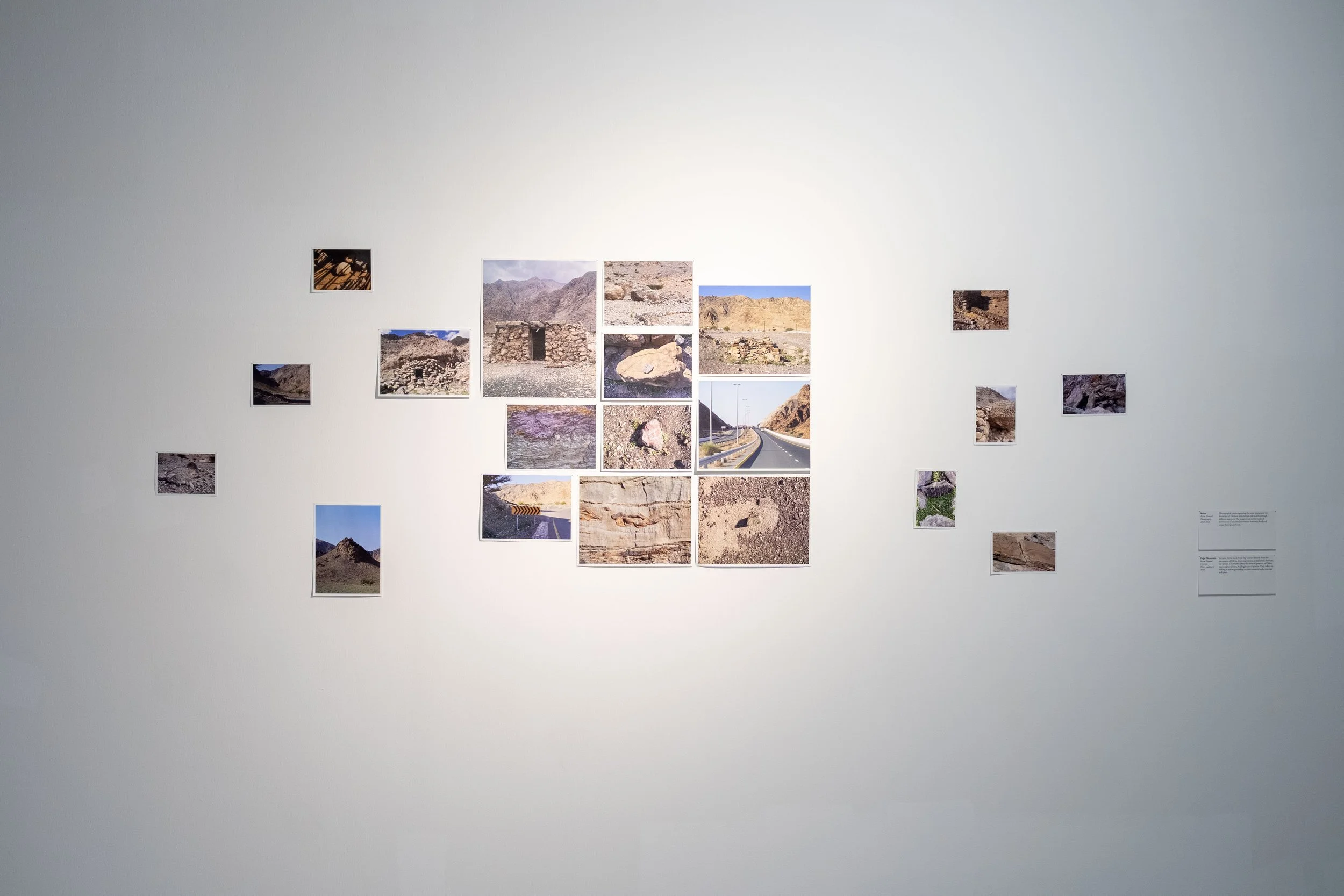
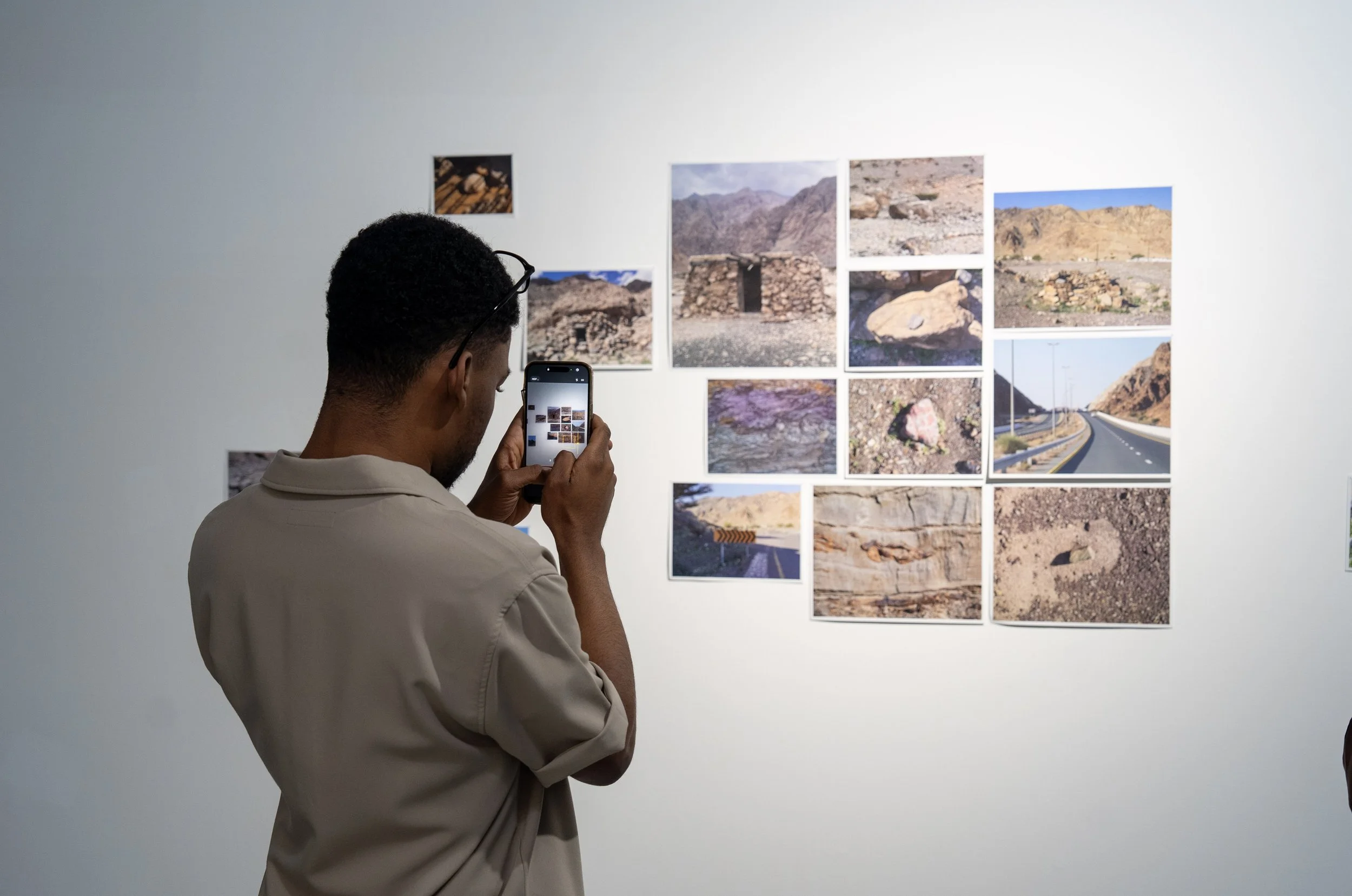
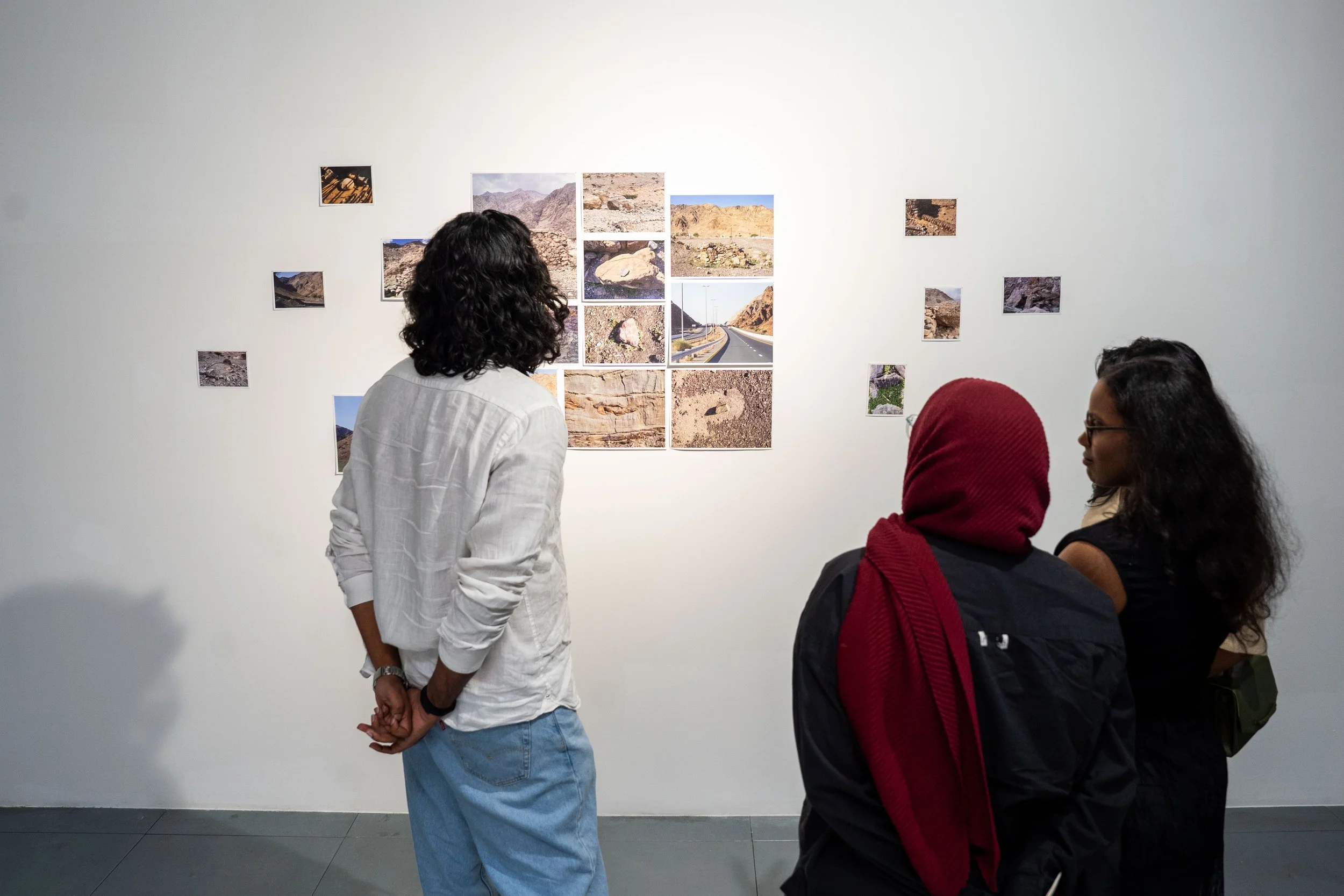
Marks of Return unfolds through Reem Hamed’s journeys between Abu Dhabi and her hometown of Dibba. What begins as a routine passage gradually opens into a deeper engagement with the landscape she returns to. In Dibba, the terrain is approached not only as a physical environment, but as a site shaped by time, holding geological presence, traces of past habitation, and layered histories embedded within it.
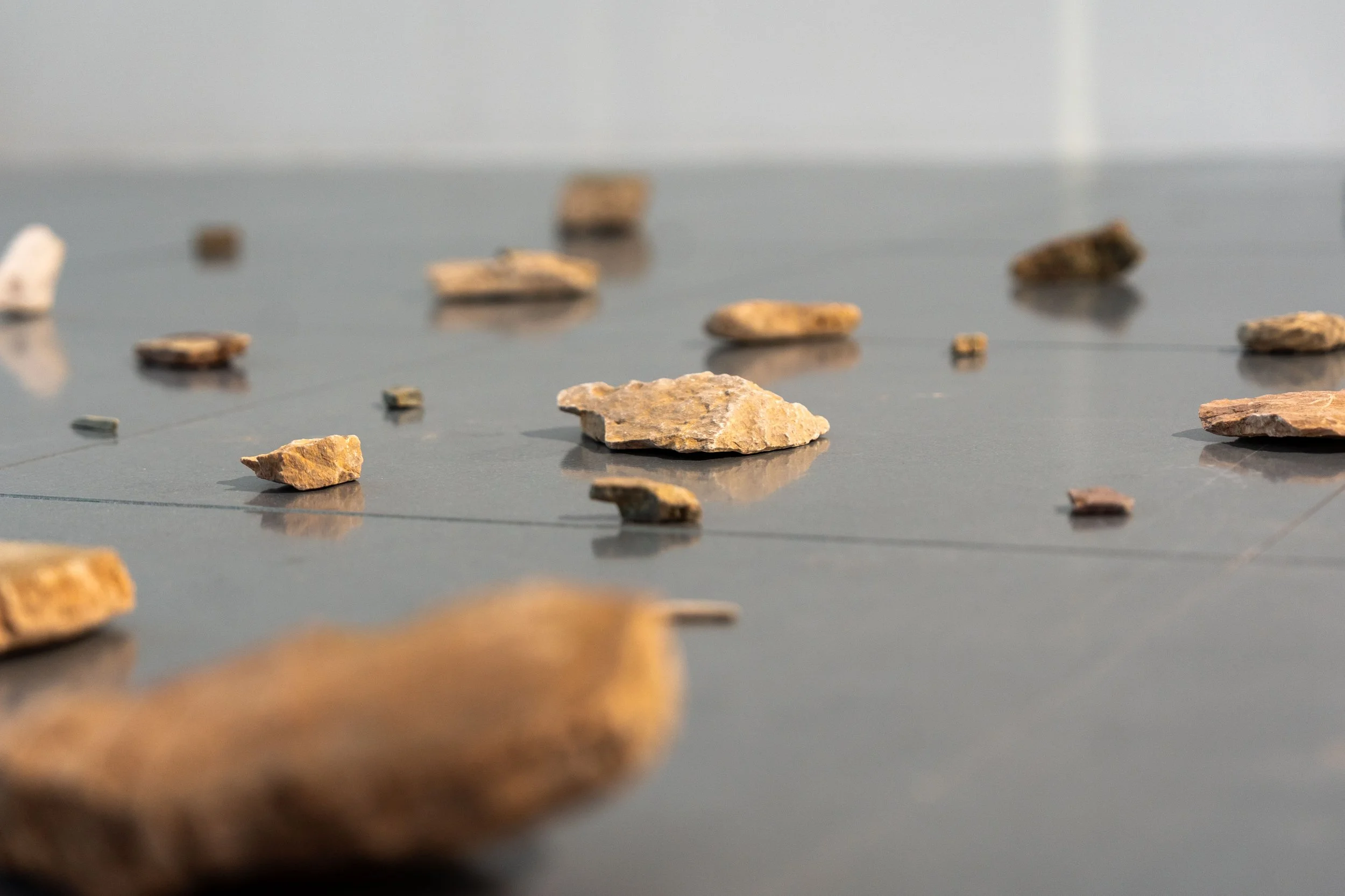
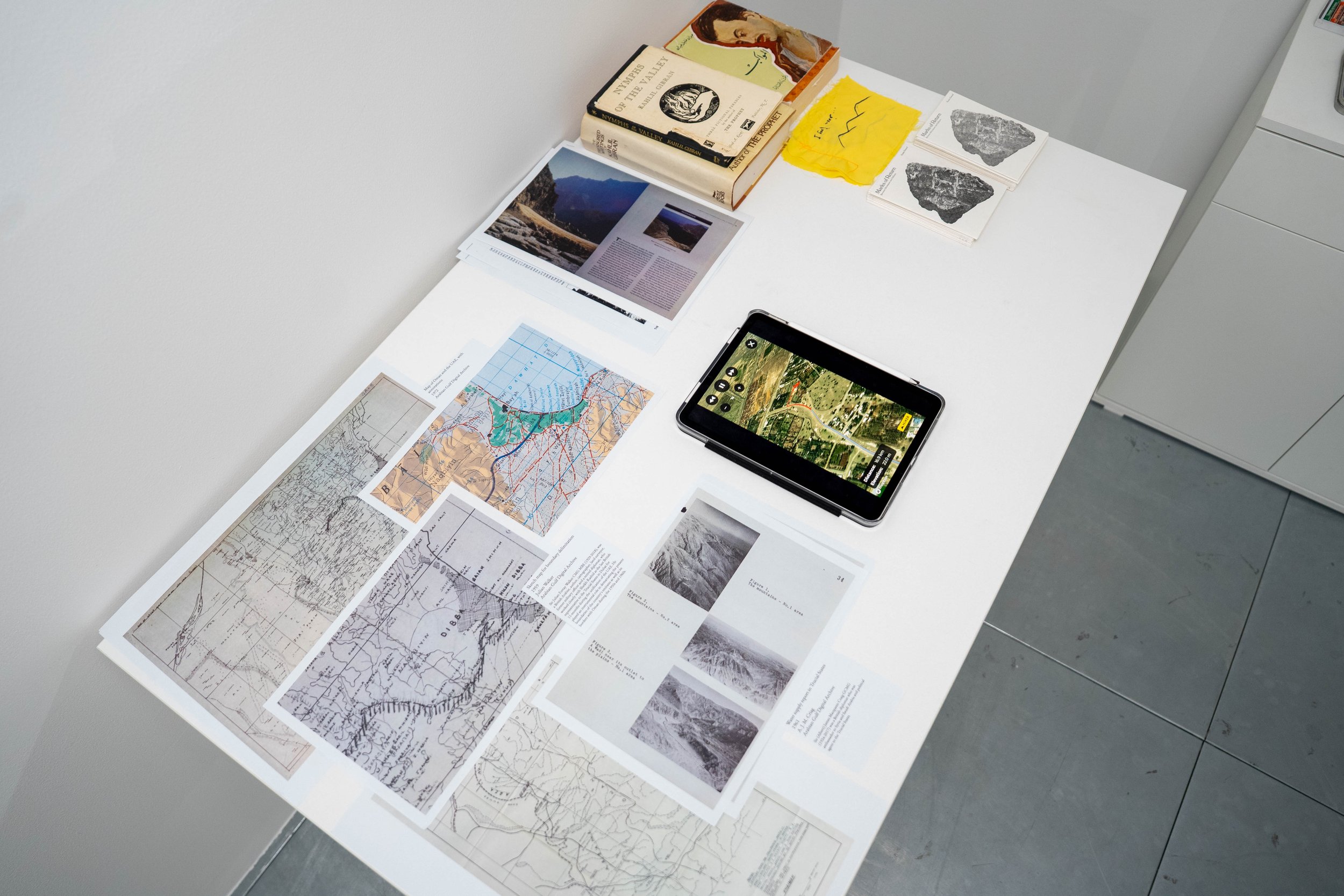
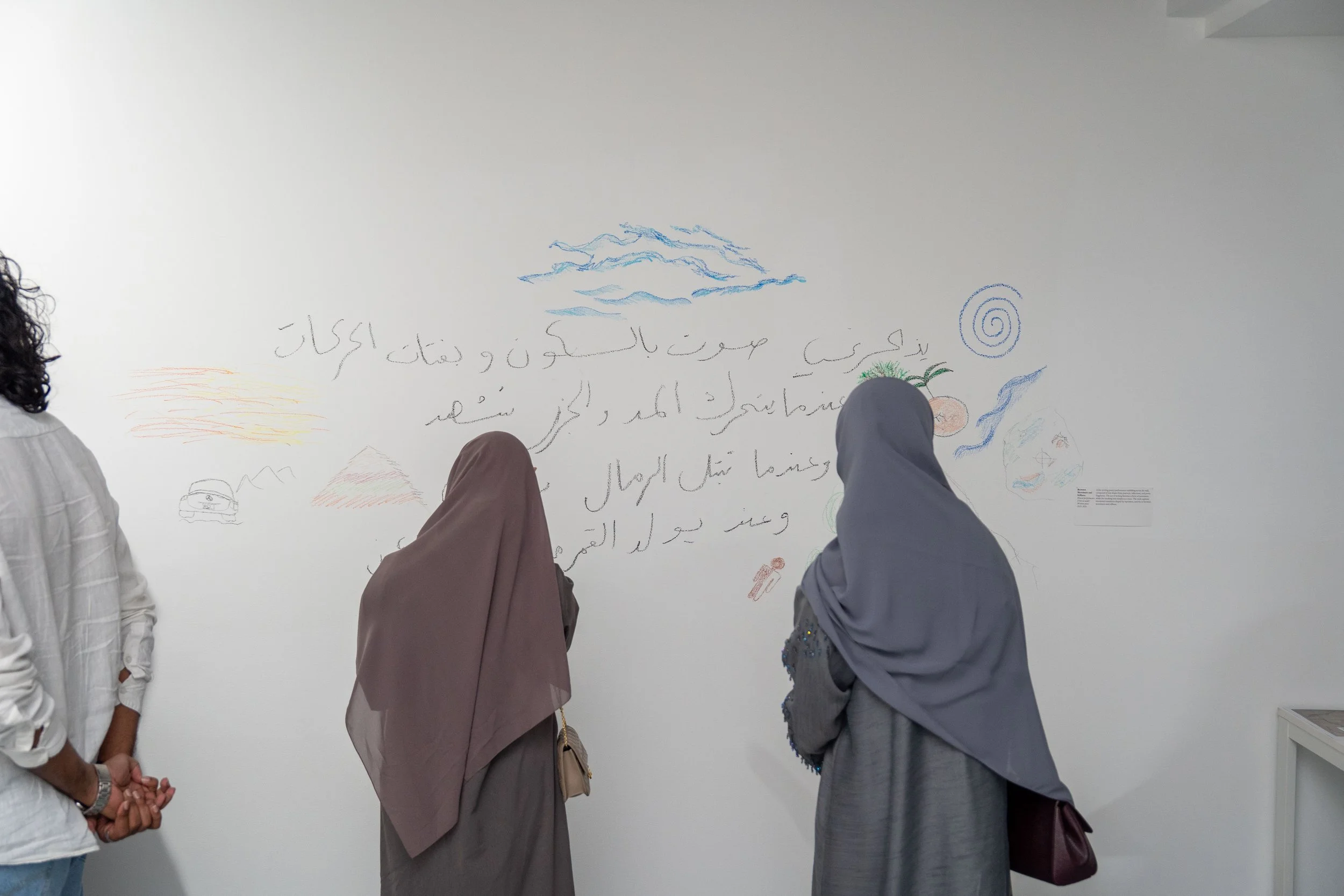
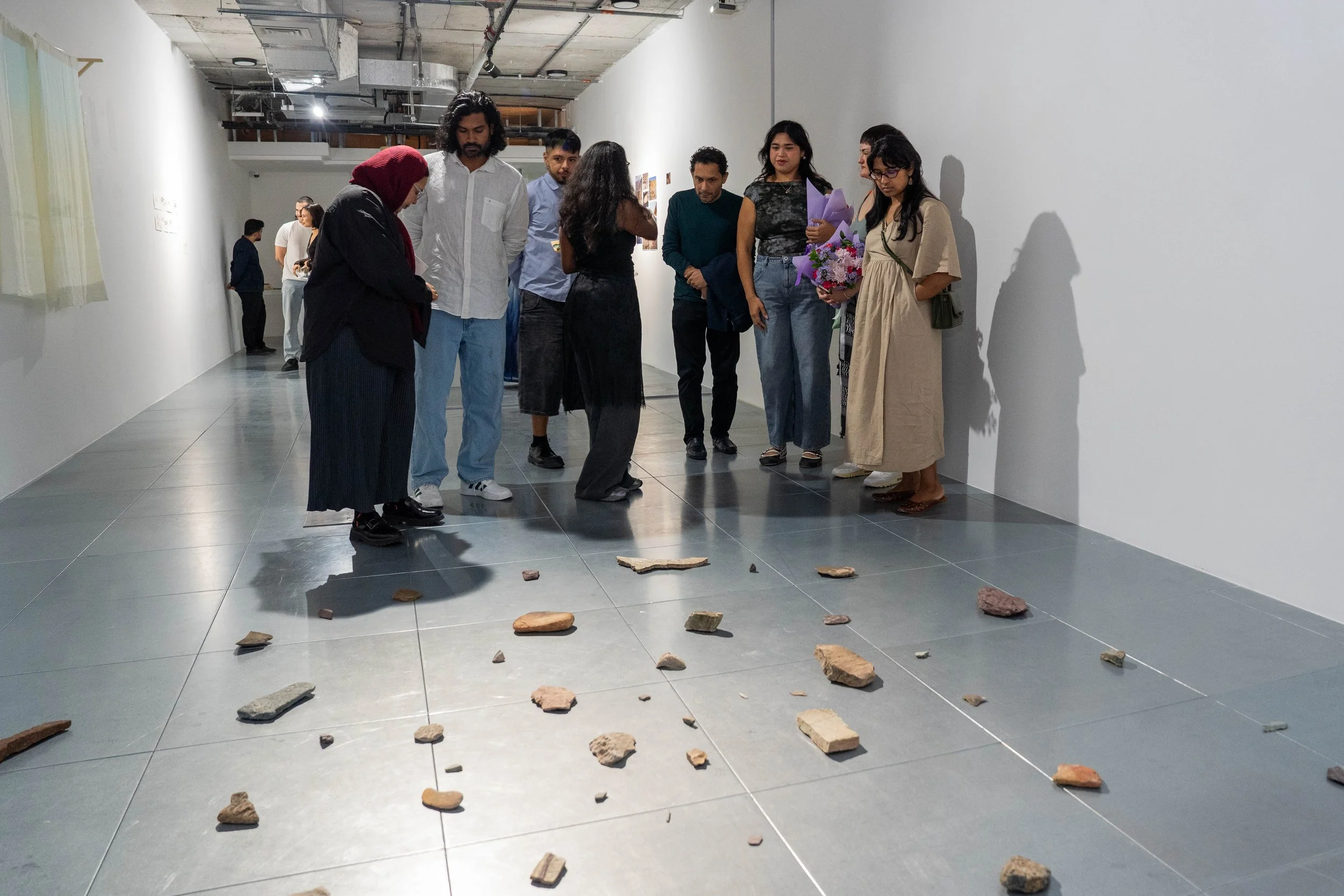
The work reflects on ways of living closely tied to land, where communities once moved, settled, and adapted in response to their surroundings. Fragments of stone structures, once used as temporary shelters, point to patterns of migration and survival. These forms suggest that movement is not separate from stillness, but contained within it; that the landscape itself holds the memory of passage. Through walking, observing, and collecting, Hamed engages with what is often overlooked. Her practice draws on gestures of tracing and documentation, forming a personal archive between preservation and interpretation, echoing an intuitive form of archaeology grounded in presence and attention.
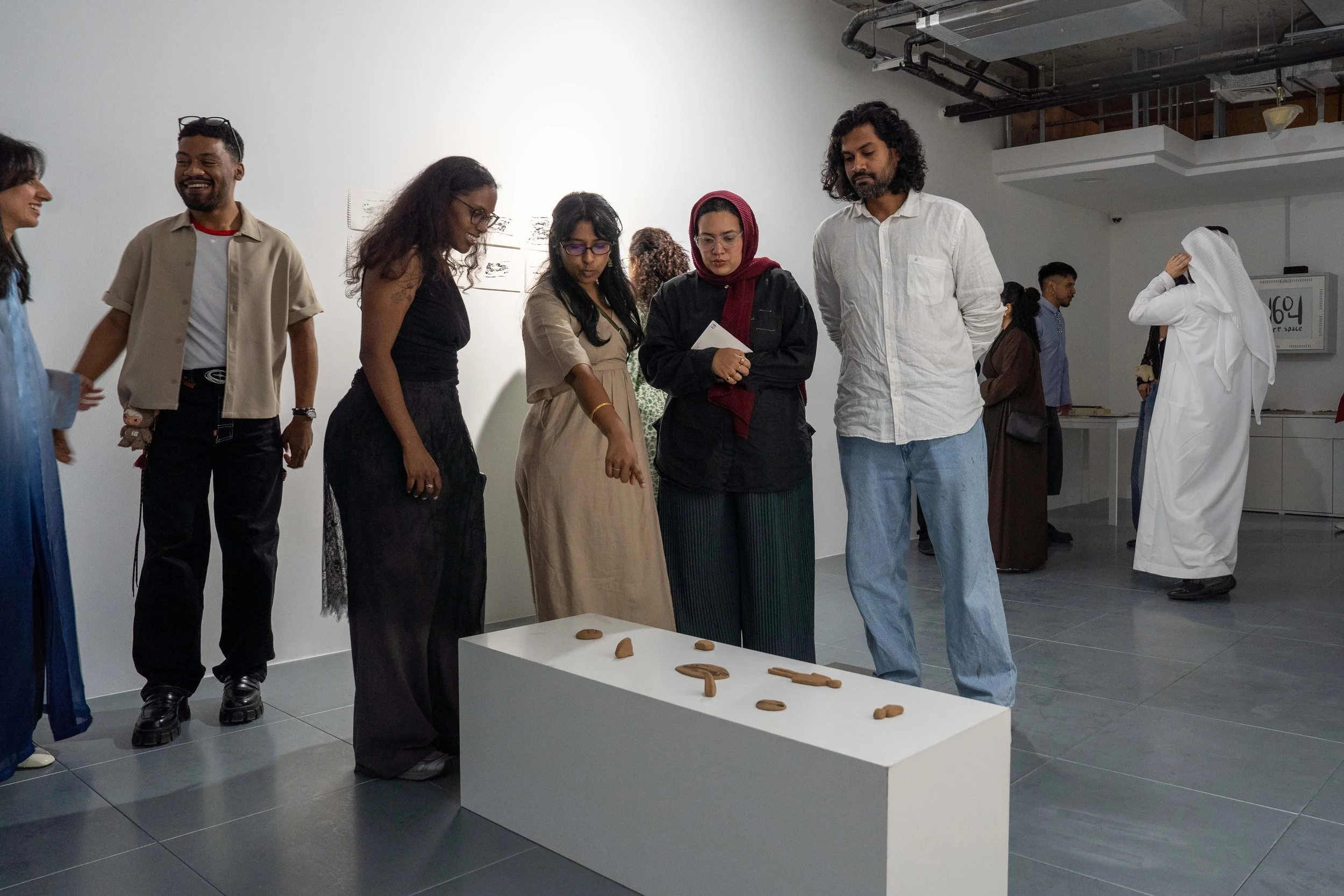
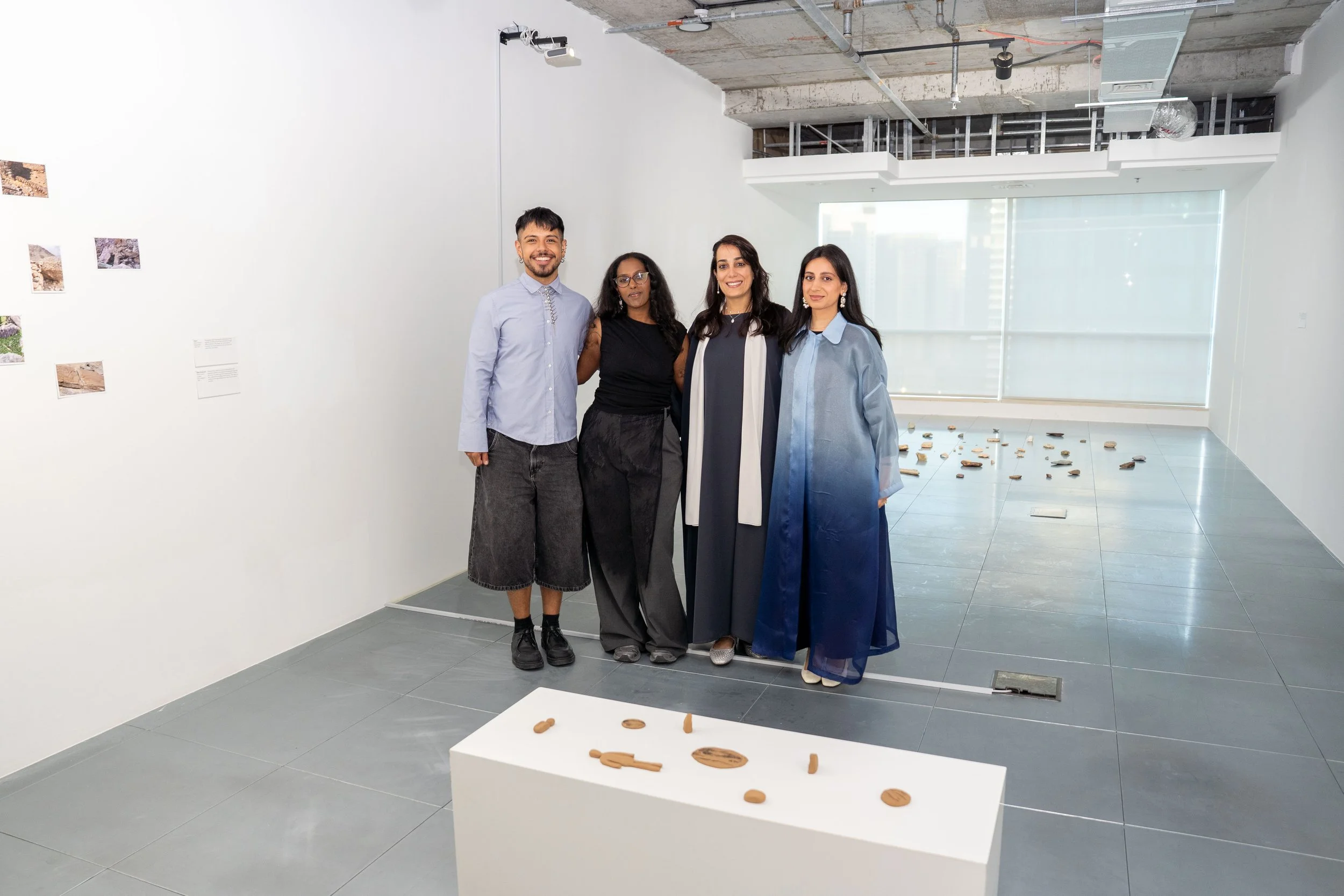
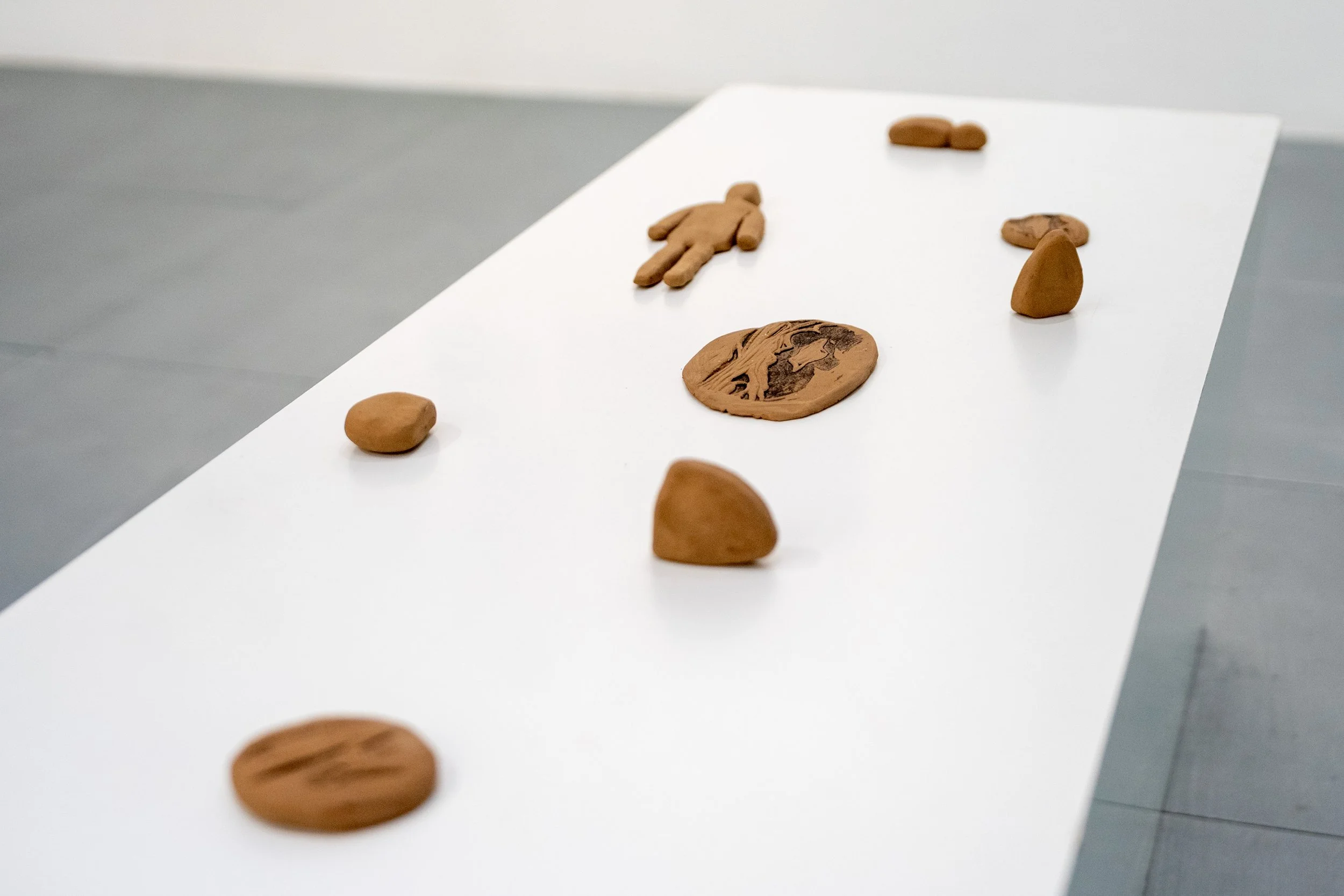
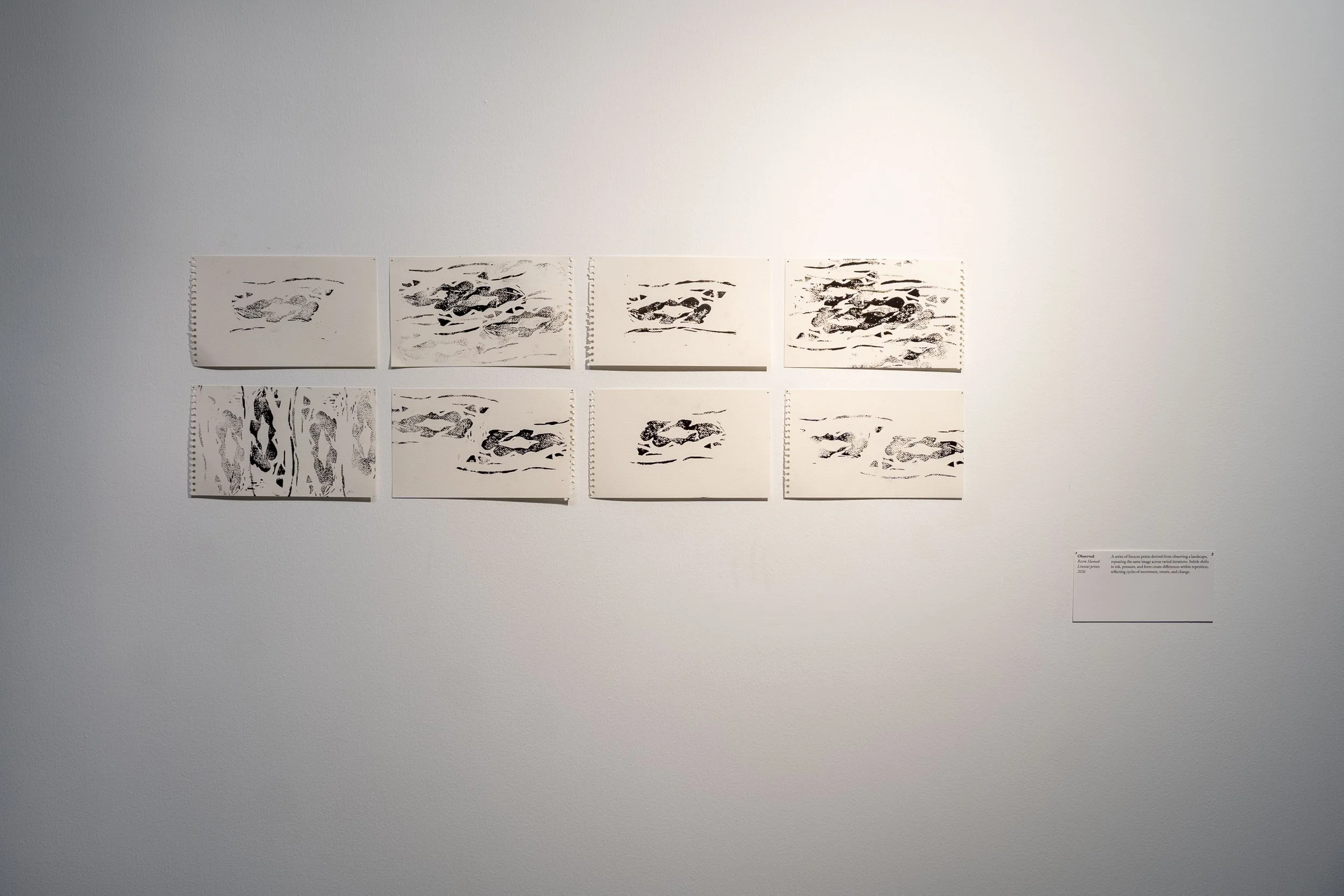
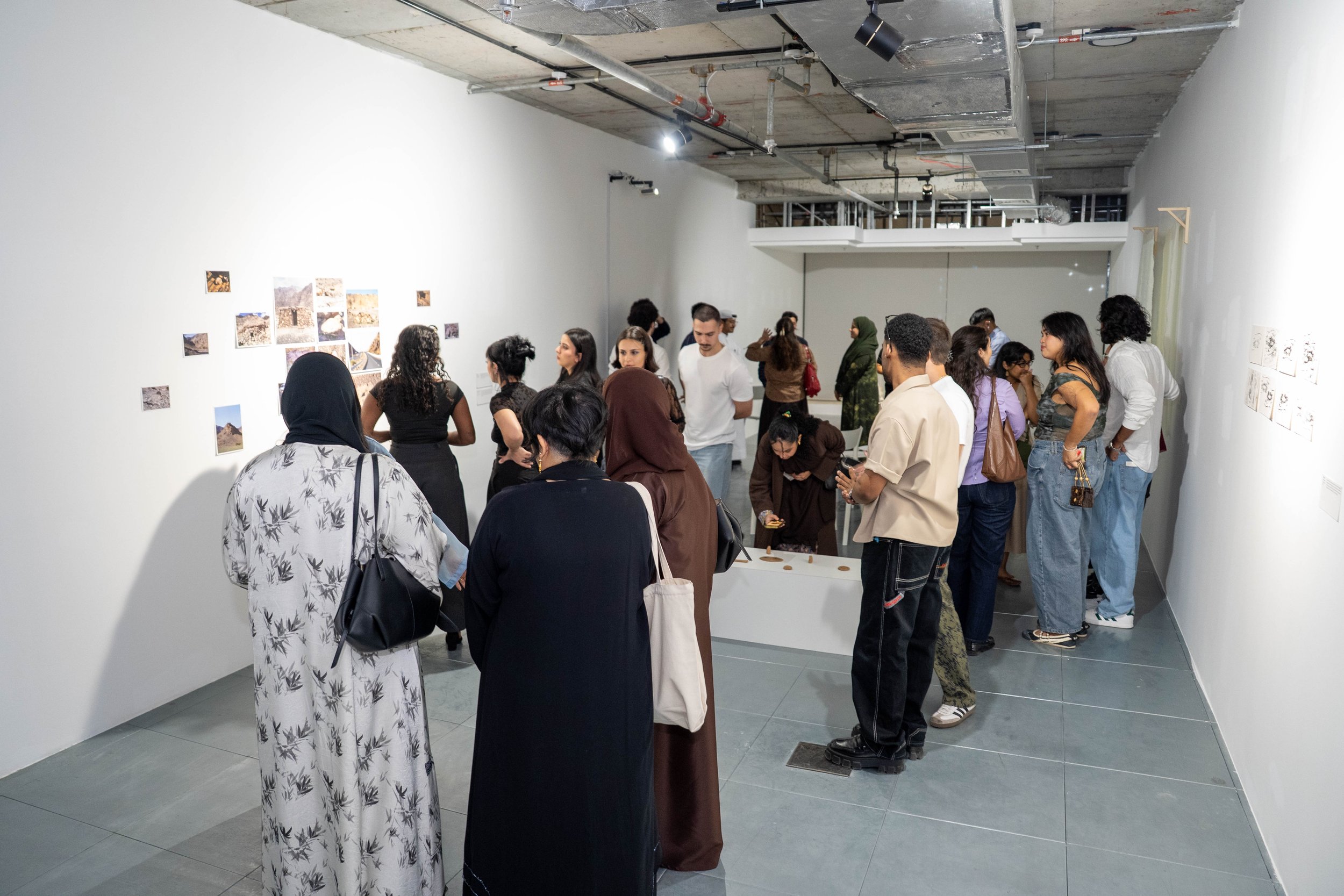
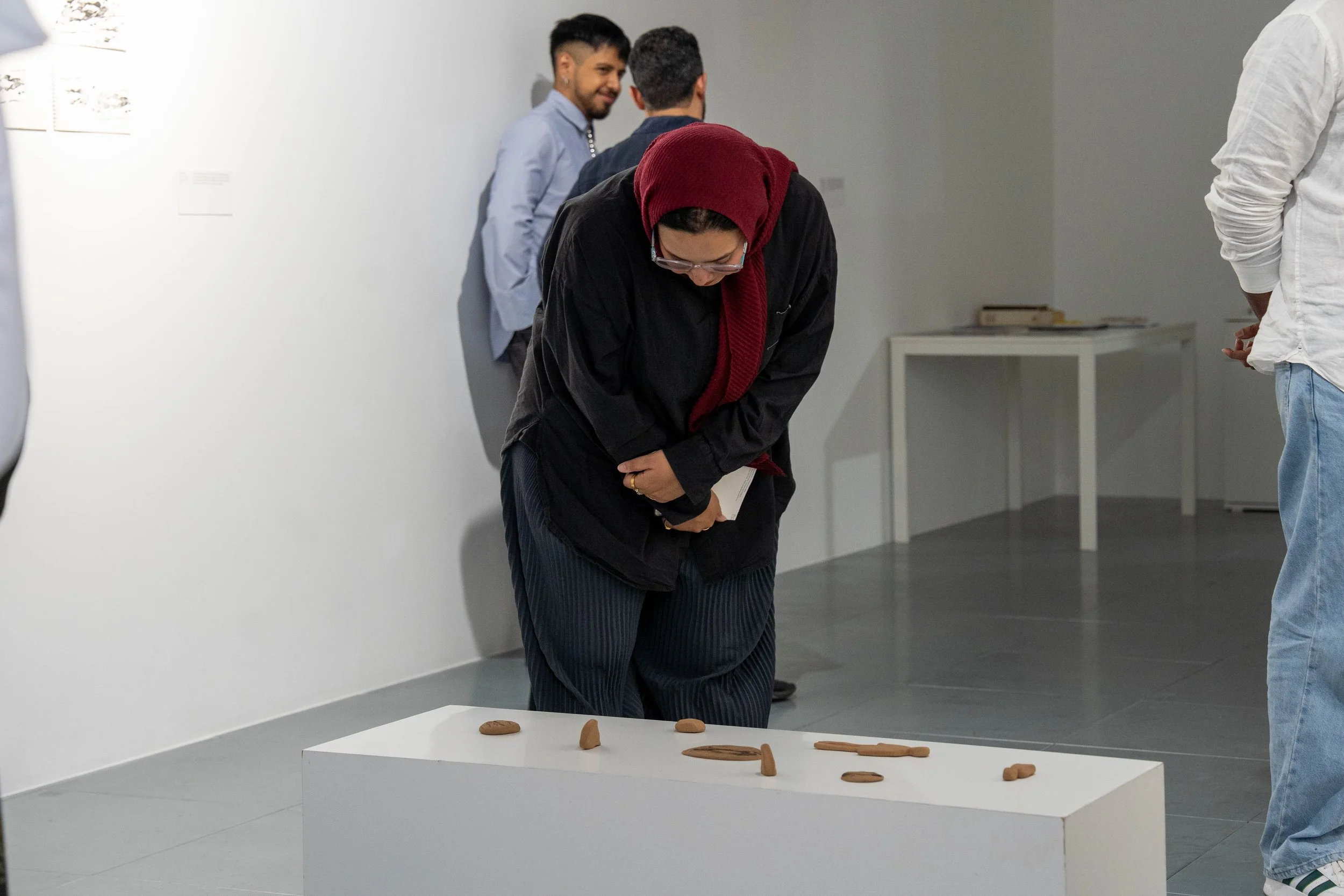
Material plays a central role. Stone carries memory and time, while clay sourced from the site is transformed into ceramic works, extending the landscape into object form. Photography, sound, linocut prints, and these ceramic and stone objects form a fabric of practice, extending the landscape’s temporal qualities.
Across these works, the exhibition maps both physical and internal journeys. It invites a slower mode of engagement, one that attends to subtle shifts, quiet resonances, and the relationship between body, place, and memory. Here, stillness is not the absence of movement, but its accumulation over time, a condition through which deeper connections to land and experience can be felt.